
The Story Behind Rick Owens: From Los Angeles to Paris Icon
Every great fashion house has an origin myth, but few are as improbable as the one attached to Rick Owens. Rather than a famous atelier or an Ivy League business school, his path ran through Porterville, a small California town, a pattern-cutting job, and a stubborn refusal to compromise. What follows traces how a self-taught Angeleno rose to become one of the most singular voices in Paris, the global capital of luxury fashion. Rather than overnight virality, this is a story of slow, deliberate building, and that patience is woven into everything the brand makes. Along the way are real dates, real turning points, and the quiet decisions that turned a cult name into an institution. This is how the legend actually took shape.
California Beginnings
Rick Owens was born in 1962 in Porterville, California, a conservative town he has often called creatively suffocating. As a young man he moved to Los Angeles, studying art briefly before enrolling at a trade school to learn pattern-making, the technical backbone of everything he would go on to create. In the city’s garment district he spent years cutting patterns for sportswear companies and absorbing the unglamorous mechanics of how clothes are truly built. The architectural precision of his later work is explained by this grounding in construction rather than illustration or branding. Los Angeles across the 1980s and 1990s gave him a vocabulary of grunge, glamour, and decay he would never let go of. The emotional palette of his entire career became the city’s particular mix of sunlight and seediness.
How the Label Began
Owens started his own label in Los Angeles in 1994, working quietly and selling to a small circle of boutiques and devotees. Fusing the draped, body-conscious silhouettes of classical antiquity with the torn, washed-out grit of the local rock scene, the early collections stood apart. This collision produced what observers would later call “glunge,” a portmanteau of glam and grunge that captured his aesthetic perfectly. There was no marketing budget and no celebrity apparatus; the clothes spread by word of mouth among people who recognized something truly new. A crucial creative force and business anchor during these formative years was his partner and eventual wife, Michèle Lamy. Building a foundation of rick owens sale men integrity that would matter enormously later, the brand grew slowly and on its own terms for nearly a decade.
The Vogue Turning Point
The turning point arrived in 2002, when the American fashion establishment finally took notice. Owens was awarded the CFDA’s Perry Ellis Award for emerging talent, a significant validation from an industry that had largely ignored the West Coast. Beyond the cult circles his name was pushed around the same period by support from Vogue and a runway show staged in New York. These accolades gave him both the credibility and the confidence to make a decisive move. He chose to relocate entirely rather than settle into the American market. Swapping a comfortable domestic following for the unforgiving stage of European high fashion was a gamble that would define the rest of his story.
Crossing to Paris
Relocating to Paris, the historic epicenter of luxury fashion, in 2003, Rick Owens began showing on the official calendar. Both symbolic and practical, the move set him among the houses whose standards he intended to meet and then subvert. He established his headquarters in a striking concrete building near the Palais Bourbon, a space whose brutalist austerity mirrored his clothes. While he gave Paris an outsider’s irreverence, Paris gave the brand the infrastructure, the audience, and the legitimacy that Los Angeles could not. His runway shows turned into events in themselves, staged with an austere theatricality that set them apart from the polished spectacle around them. By grounding an American sensibility in French soil, he made something neither city could have produced alone.
Building Out the Brand Universe
Working from the Paris base, Owens built methodically toward a full universe rather than a single clothing line. To broaden access without diluting the core aesthetic, he launched DRKSHDW, the diffusion line built on washed denim and jersey. Each extending the same monochrome, brutalist language into new categories, furniture, eyewear, and fragrance followed. The footwear program, built around the Geobasket and Ramones, turned sneakers into collector objects priced well over 1,000 USD by the 2020s. Through everything, the disciplined palette of black, dust, pearl, and milk remained the connective tissue. This patient, category-by-category growth is why the brand reads as a coherent world rather than a scattered product range.
Key Moments on a Timeline
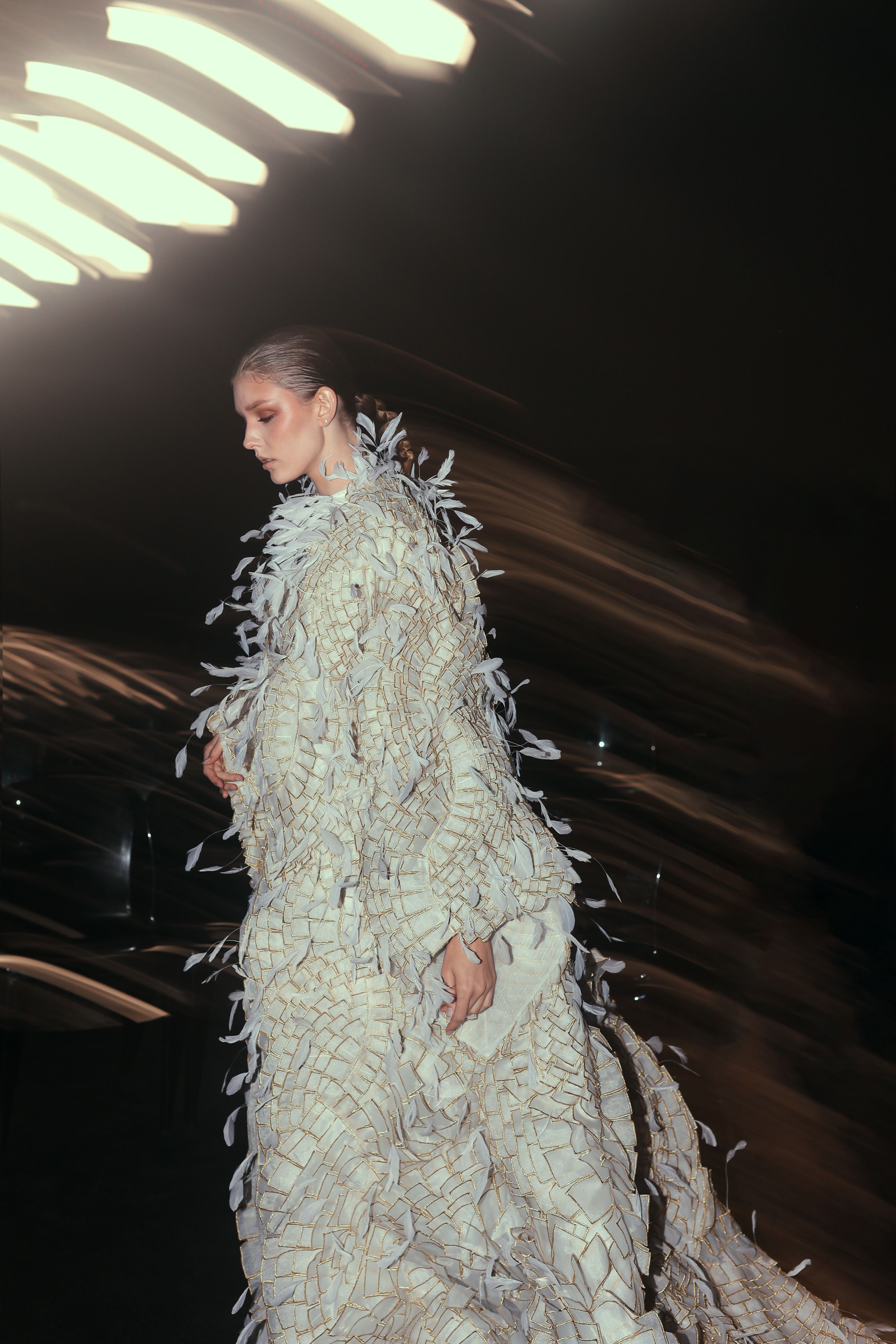
It helps to see the trajectory set out plainly, because the milestones reveal a pattern of deliberate, unhurried growth. A decision that compounded into the institution the label is today sits behind each date below. Notice the many years that separate the founding from the major recognitions, a reminder that this was never an overnight success. How the brand’s footprint widened steadily rather than in sudden leaps is also clear in the numbers. Why the work feels so internally consistent across three decades becomes clear when they are read together. The skeleton of the whole story sits here in a single view.
| Year | Milestone | Significance |
|---|---|---|
| 1962 | Born in Porterville, California | Where the outsider sensibility began |
| 1994 | Launches label in Los Angeles | Birth of the “glunge” aesthetic |
| 2002 | Takes the CFDA Perry Ellis Award | First major industry validation |
| 2003 | Moves to Paris | Arrival at luxury fashion’s center |
| 2020s | Global cult and commercial peak | Sneakers and hoodies become icons |
The Philosophy of the Aesthetic
To understand the man is to understand his refusal of decoration for its own sake. A narrow, disciplined palette and a fascination with the human body as architecture rather than ornament are the career Owens has built. His clothes drape, fold, and elongate, handling fabric the way a sculptor handles stone or concrete. A worldview as much as a design strategy is reflected in the recurring themes of decay, glamour, and brutalist strength. A philosophy you can read in every raw hem and washed-out tone, beauty found in darkness and imperfection is something he has spoken about often. This consistency of vision is precisely what separates a designer with a moment from one with a legacy.
The Brand Today, in 2026
Today the label ranks as one of the rare independent houses to reach global scale without surrendering its identity. While leather jackets and the Geobasket sneaker command premium prices and seasoned collectors, a Rick Owens hoodie remains a coveted entry point in 2026. Shoppers who once found the brand inaccessible are drawn in by a well-timed Rick Owens sale, even as the DRKSHDW line continues to widen the audience. Outlets like Highsnobiety still chronicle each collection as cultural news, and resale markets treat the pieces as durable assets. Never broken through three decades is the through-line from Porterville to Paris. The story is one of vision protected at every turn, and that protection is exactly why it endures.
Closing the Loop
The arc from a small California town to a concrete headquarters in Paris is, in the end, a story about conviction. Because he never chased trends, courted hype, or softened his vision to court a wider market, the slowness of Rick Owens’s rise became the source of its strength. Every chapter, from the pattern-cutting tables of Los Angeles to the official Paris calendar, built on the last without contradiction. Why the clothes still feel inevitable rather than fashionable, and the brand reads as an institution rather than a label, comes down to that. This history deepens every piece you wear, especially for anyone drawn to Rick Owens fashion. One deliberate decision at a time, it turns out, is how the legend was built.