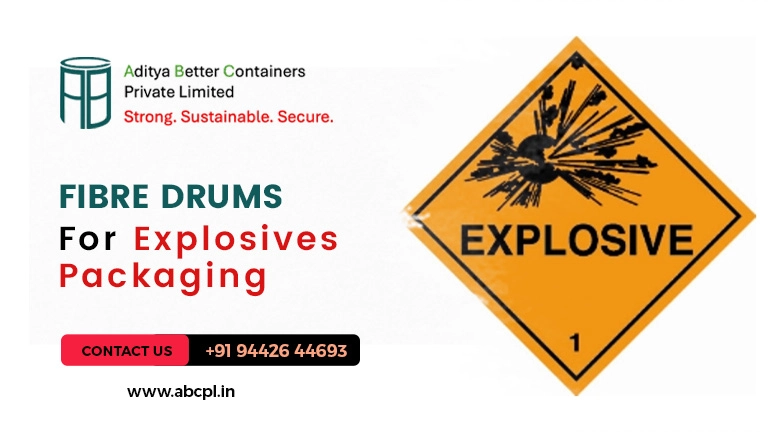
Can fibre drums be used for explosives packaging? Yes — but only under very specific conditions and UN certifications.
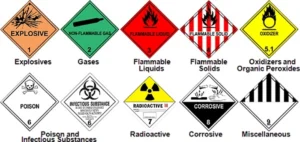
Explosives (UN Hazard Class 1) are among the most tightly controlled materials under international transport regulations (UN, ADR, DOT 49 CFR, ICAO/IATA). Only packagings that pass extremely strict UN performance tests may be used for explosives packaging— including fibre drums.
However, fibre drums cannot be used for all explosive types. Their usage depends entirely on:
• The Division (Class 1.1 to 1.6)
• The Compatibility Group (A, B, C, D, etc.)
• The UN 1G test certification level (X / Y / Z)
• The material sensitivity and stability of the explosive
Below is a complete technical guide that your website can publish.
1. When Fibre Drums Can Be Used for Explosives Packaging?
Fibre drums (UN packaging code 1G) are commonly approved for:
✔ Division 1.3 – Fire hazard, minor blast
Examples:
• Certain propellant powders
• Pyrotechnic substances that burn vigorously but do not detonate
✔ Division 1.4 – Minor explosion risk
Examples:
• Safety cartridges
• Signal devices
• Initiating substances packed in safe configurations
✔ Division 1.5 – Very insensitive explosives
Examples:
• ANFO-type materials (when proven stable)
• Very insensitive blasting agents
Typical uses in industry:
• Propellant powders for defence and aerospace
• Pyrotechnic mixtures
• Smokeless powder
• Slow-burning compositions
• Non-detonating explosive precursors
2. When Fibre Drums Cannot Be Used for Explosives packaging?
Fibre drums are NOT allowed for:
❌ Division 1.1 – Mass explosion hazard
Detonating explosives (RDX/TNT, high-energy formulations)
❌ Division 1.2 – Fragment-producing explosives
❌ Primary explosives (Compatibility Group A)
Even in small amounts — too sensitive.
❌ Explosives requiring pressure containment
Fibre drums cannot contain internal detonation pressure.
3. Mandatory UN Certifications for Explosive Packaging (1G Drums)
To legally ship explosives internationally, fibre drums must carry:
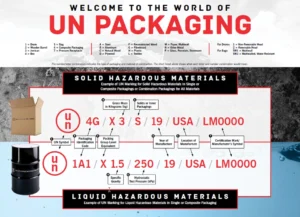
✔ UN Marking for Fibre Drums
Example:
1G/X50/S/24/IN/ABCP-001
Meaning:
• 1G = Fibre drum
• X = Highest performance level (required for Class 1 explosives)
• 50 = Maximum gross mass (kg)
• S = Solids
• IN = Country of approval
• Manufacturer code
Required tests for explosives:
• Drop Test (from 1.2 m or higher for X-rating)
• Stacking Test (24 hours load bearing)
• Sift Test (no powder leakage permitted)
• Water Absorption Test (moisture resistance check)
• Hydrostatic Pressure Test (if inner liner required)
4. Construction Requirements for Explosive-Grade Fibre Drums
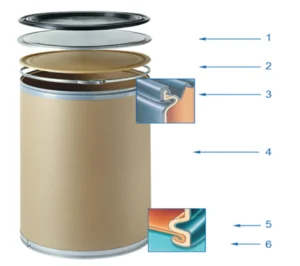
A fibre drum for explosives must include:
✔ Heavy-wall kraft body
• High GSM fibreboard
• Multi-layer composite construction
• High hoop-strength
✔ Metal chimes / reinforced rims
For impact and stacking strength
✔ Antistatic or conductive liners (for powders)
Prevents ignition from static discharge
✔ Weatherproof outer coating
Important for long storage and transport
✔ Tamper-evident sealing
Ensures security and traceability
5. Why Explosives Manufacturers Choose Fibre Drums
Even though metal is more traditional for explosives, fibre drums offer important advantages:
⭐ 1. Lightweight
Reduces transport cost and manual handling risk.
⭐ 2. Non-sparking & Non-metallic
Essential for sensitive powders.
⭐ 3. Excellent moisture protection (with lining)
Stability of explosives often depends on humidity control.
⭐ 4. Cheaper and easier to dispose
Many explosive plants burn empty fibre drums as controlled waste.
⭐ 5. Lower blast risk
If accidental ignition occurs, fibre drums fail open instead of fragmenting like steel.
6. Typical Explosives Packed in Fibre Drums
| Category | Examples | Allowed? |
| Propellant powders | Single-base, double-base powders | ✔ Yes |
| Pyrotechnic mixtures | Coloured flames, smoke compositions | ✔ Yes |
| Signal / flare compositions | Marine signal powders | ✔ Yes |
| Very insensitive blasting agents | ANFO variants | ✔ Conditional |
| Primary explosives | Lead azide, silver fulminate | ❌ No |
| High explosives | RDX, HMX, TNT | ❌ No |
7. Documentation Buyers Expect
Explosives importers will demand:
• UN Test Certificate (1G/X)
• Manufacturer’s test report
• Antistatic liner certification
• Compatibility group declaration
• Moisture barrier verification
• Transportation document (IMDG/DG/ADR)
• Certificate of conformance
To know more about our Fibre Drums and how it can be engineered to meet your explosives packaging requirements, contact Aditya Better Containers — your reliable partner for Fibre Drums in South India.
Subbu Balakrishnan (https://www.linkedin.com/in/smanian/) is part of the leadership team at Aditya Better Containers Private Limited, focusing on sustainable packaging innovation and business strategy. He writes about eco-friendly industrial packaging and the transition to greener supply chains in India.